Insights
Practical perspectives on architecture, software delivery, Microsoft technologies, and product development - drawn from real-world experience.
These are not theoretical articles. They reflect what we build, what we fix, and what we learn while working with systems in production.
20+ years of experience across architecture, enterprise systems, cloud, and product engineering.
Categories: Architecture | Modernization | Microsoft / Azure | Delivery | ESG / BRSR
A Health Endpoint Should Tell You More Than 'The API Is Up'
A useful APIM health endpoint distinguishes reachability from readiness while keeping its public contract simple, stable, and operationally trustworthy.
Where Should Business Logic Live: Power Apps, Dataverse, API or Report?
Power Platform offers many places to implement a rule. Durable solutions make ownership explicit across Power Apps, Dataverse, APIs, automation, and reports.

Configuration-Driven Power Apps Age Better Than Hard-Coded Forms
When business variability is represented as governed Dataverse configuration, Canvas Apps can evolve without accumulating brittle Power Fx branches.
API Versioning Is Easy. Operating Multiple API Versions Is Not.
Creating another APIM version is easy. Operating multiple contracts safely requires lifecycle ownership, reproducible delivery, observability, and deliberate retirement.
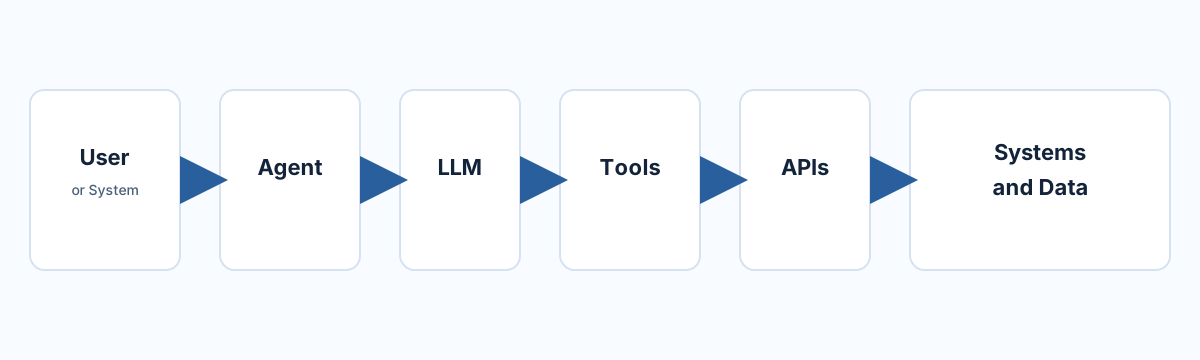
AI Is Not a Feature. It Is a System
Teams do not struggle with AI because models are weak. They struggle because APIs, data flow, observability, and operating design are not AI-ready.
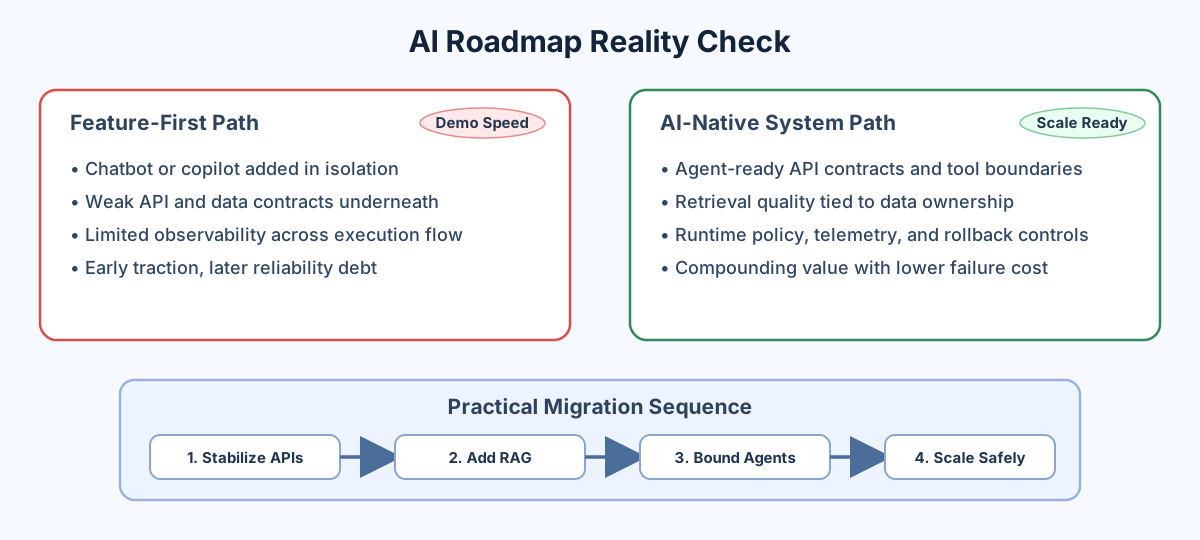
AI-Native Systems: A CTO Reality Check
If AI is treated like a feature, teams ship demos. If AI is treated like a system, teams ship durable outcomes.
Why Enterprise Integrations Break Down at Scale
Most integration failures are architectural, not technical. Point-to-point connections compound quietly into systems that are hard to diagnose, change, or operate reliably.
What We Look for in an Architecture Review
Architecture reviews are not about diagrams first. They start with problem clarity, complexity control, data flow, failure handling, and delivery discipline.
Why Most Modernization Projects Struggle (And What Actually Works)
Modernization struggles usually start before implementation. Controlled evolution, data-first planning, and stronger DevOps consistently work better than full rewrites.
ESG/BRSR for MSMEs - The Real Problem Nobody Talks About
The ESG/BRSR challenge for MSMEs is not compliance awareness, it is operational clarity: what to track, who owns data, and how to keep reporting practical.
Common Mistakes in Azure-Based Systems
Many Azure issues come from architecture and delivery gaps, not the platform itself. These are the recurring mistakes and practical fixes.

Why DevOps Matters More Than Architecture
Great architecture still fails without delivery discipline. DevOps often determines whether systems remain reliable, operable, and change-ready.