Challenge
Large Azure estate required subscription migration, legacy modernization, and environment rebuild without disrupting enterprise operations.
Approach
Executed a structured program using Bicep standardization, CI/CD modernization, .NET upgrades, and Entra ID-based security controls.
Outcome
Delivered a modern Azure platform with standardized deployments, stronger security, reduced cloud waste, and reliable multi-environment operations.
Engagement snapshot
Azure subscription migration, environment reconstruction, delivery automation, identity modernization, and application upgrades across an eight-application enterprise estate.
- Applications modernized
- Eight enterprise applications
- Environment coverage
- Development, Stage, and Production
- Security change
- Custom JWT replaced with Microsoft Entra ID
Legacy .NET Framework workloads were upgraded to .NET Core 8 architecture patterns.
Reusable Bicep templates established repeatable provisioning across three environment tiers.
Policy-based API access controls replaced the previous custom authentication approach.
Challenge
The client needed to migrate an enterprise Azure estate as existing subscriptions and services approached end-of-support.
The engagement involved:
- Migrating to new Azure subscriptions
- Rebuilding Dev, Stage, and Prod environments
- Upgrading multiple legacy applications
- Preserving continuity for internal enterprise workflows
Key challenges:
-
Subscription migration complexity Workloads had to move across subscriptions while preserving service continuity and strict environment boundaries.
-
Legacy application stack Multiple applications were still on .NET Framework 4.x and needed modernization to .NET Core 8.
-
Inconsistent deployment patterns Each application had different release constraints, including FE+BE monolith repos and backend plus function-app combinations.
-
Security gaps Custom JWT-based authentication had to be replaced with enterprise-grade identity and policy controls.
-
Cost optimization pressure Duplicate services and redundant application footprints were increasing Azure costs.
-
CI/CD inconsistency Build and release pipelines were fragmented and non-standardized across applications.
Approach
Kindl Labs executed a structured migration and modernization program combining infrastructure-as-code, CI/CD standardization, and targeted application refactoring.
Core approach:
-
Infrastructure standardization using Bicep Reusable templates provisioned Dev, Stage, and Prod environments with consistent configuration across subscriptions.
-
CI/CD implementation for enterprise apps Build and release pipelines were designed for eight applications, with standardized quality and deployment controls.
-
Application modernization Legacy .NET Framework applications were upgraded and refactored to .NET Core 8 architecture patterns.
-
Complex deployment handling Pipelines were designed to handle combined FE+BE repos and independent backend/function deployments without cross-component side effects.
-
Identity and security modernization Custom JWT implementations were replaced with Microsoft Entra ID and policy-based API access controls.
-
Data and service integration Secure integration patterns were established for Cosmos DB and SQL Server backed applications.
-
Cost optimization Duplicate applications and redundant services were identified and consolidated to reduce spend.
Solution Architecture
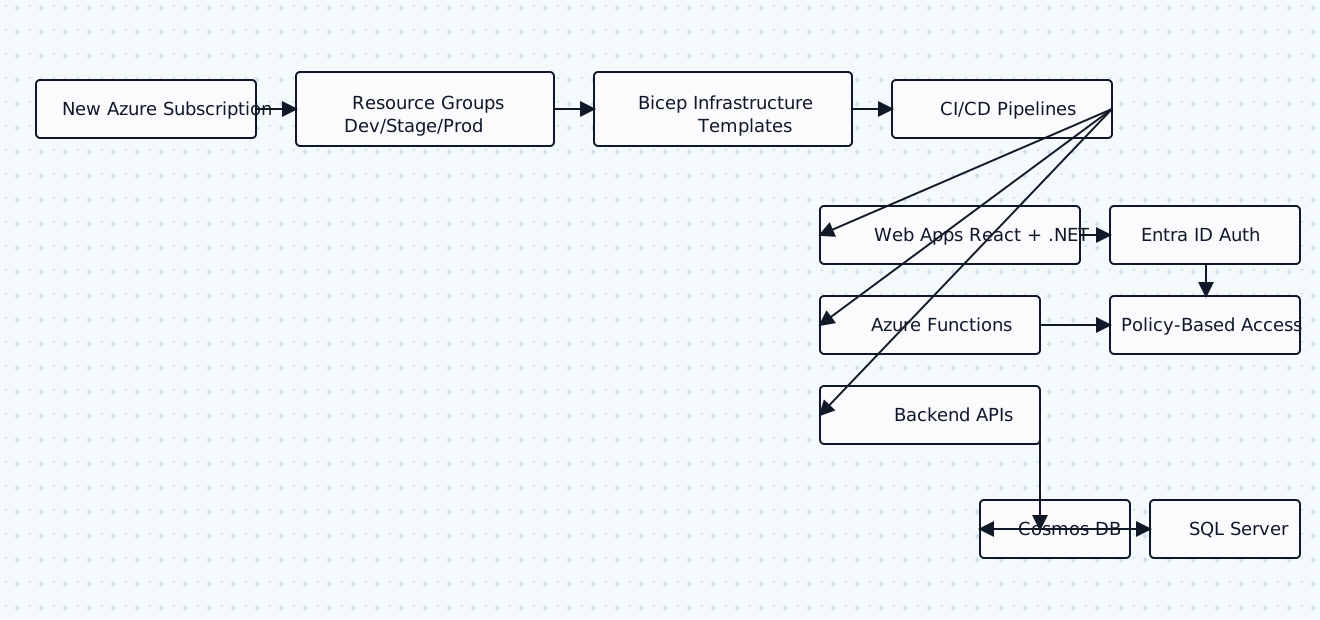
The architecture follows a left-to-right migration flow from subscription and infrastructure setup into CI/CD orchestration, then distributed application deployment with centralized identity and policy controls.
Outcome
The program delivered a modern, scalable, and secure Azure platform.
Key results:
-
Successful subscription migration Applications moved to new subscriptions with minimal operational disruption.
-
Modernized stack Eight enterprise applications were upgraded to .NET Core 8 for better maintainability and performance.
-
Standardized CI/CD Unified build and release patterns improved deployment speed and reliability.
-
Deployment flexibility Independent deployment of backend and function applications reduced operational coupling.
-
Security uplift The identity model shifted from custom JWT to Entra ID with policy-driven access control.
-
Cost reduction Duplication in applications and services was reduced to improve Azure utilization.
-
Repeatable infrastructure Bicep-based provisioning enabled consistent, scalable environment setup.
Technologies
- C#
- .NET Core 8
- React
- Azure Functions
- Azure App Services
- Cosmos DB
- SQL Server
- Microsoft Entra ID
- Bicep
- Azure DevOps Pipelines
Testimonial
“Kindl Labs helped us modernize our Azure environment and application stack efficiently. Their structured approach to migration and automation significantly improved deployment reliability and system scalability.”
From proof to your next decision
See the capability demonstrated in this engagement and the thinking behind the approach.
Cloud & DevOps Foundations
Reliable cloud environments and delivery pipelines that support consistent software delivery.
Explore the service Related perspectiveWhy Most Modernization Projects Struggle (And What Actually Works)
Modernization struggles usually start before implementation. Controlled evolution, data-first planning, and stronger DevOps consistently work better than full rewrites.
Read the insightDiscuss a similar challenge with the team behind our cloud & devops foundations work.
Start a conversation