DevOps Enablement and Observability for Marketing Forecasting Platform
Challenge
Forecasting platform had CI/CD inconsistency, risky database releases, and fragmented observability across application and business signals.
Approach
Implemented standardized pipelines, SQL database project release controls, and integrated observability using App Insights, Log Analytics, and Power BI.
Outcome
Improved deployment reliability, reduced schema-related incidents, and enabled faster diagnosis with centralized telemetry and dashboards.
Engagement snapshot
Release automation and observability uplift across the forecasting platform's React frontend, .NET API, SQL Server database, and reporting layer.
- Release coverage
- Frontend, backend, and database
- Database control
- Version-controlled SQL Database Project
- Observability coverage
- Application Insights, Log Analytics, and Power BI
Automated pipelines aligned application and schema delivery across the platform.
Schema objects and procedures moved into a repeatable deployment model.
Technical telemetry, centralized logs, and business-facing trends were brought into a coordinated monitoring model.
Challenge
A global giant FMCG company operated an internal marketing forecasting platform used by business teams for planning and decision-making.
The platform stack included:
- React frontend
- .NET 8 API backend
- SQL Server database
- Chart.js visual layer
The application was functional, but critical gaps existed in release automation, database change handling, and operational visibility.
Key challenges:
-
Lack of standardized CI/CD Build and release flows were inconsistent and relied too heavily on manual execution.
-
Database deployment risks Changes to stored procedures, tables, and schema objects could introduce runtime breakage if not coordinated safely.
-
Limited observability Monitoring for performance, failures, and usage patterns was insufficient for dependable operations.
-
Fragmented monitoring stack No single view existed across application telemetry, logs, and business-facing trend visibility.
-
Deployment reliability concerns Application and database updates required frequent manual coordination, raising failure risk.
Approach
Kindl Labs implemented a structured DevOps and observability framework to improve release reliability, reduce operational risk, and increase visibility.
Core approach:
-
CI/CD pipeline implementation Automated build and release pipelines were introduced for frontend, backend, and database delivery, with consistent promotion behavior across environments.
-
Database deployment strategy A SQL Server Database Project model was introduced so schema objects, procedures, and migration changes were version-controlled and deployed repeatably.
-
Infrastructure deployment consistency Azure App Service deployment was aligned with standardized environment conventions for Dev, Stage, and Prod.
-
Observability architecture Application Insights and Log Analytics were integrated for runtime visibility, while Power BI dashboards surfaced business and operational trends.
-
End-to-end deployment alignment Application and database releases were coordinated in a single operational model to reduce schema mismatch incidents.
Solution Architecture
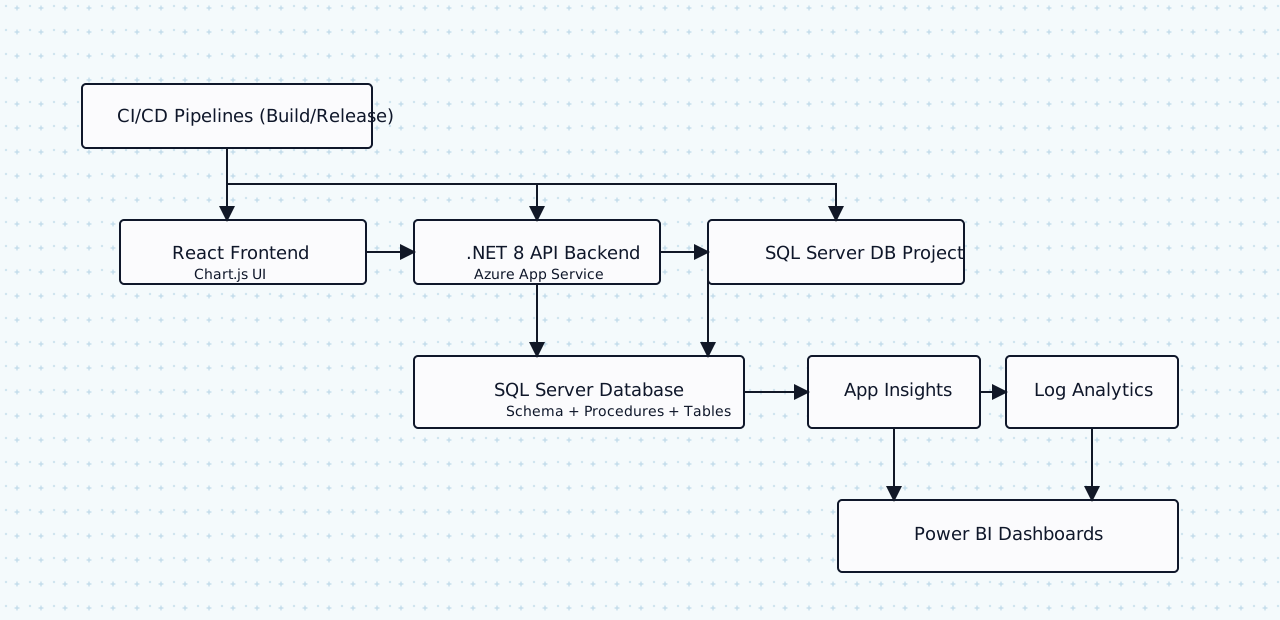
The architecture links build-and-release orchestration to application and database delivery, then layers observability for both technical operations and business-facing insight.
Outcome
The engagement improved platform reliability, observability maturity, and release confidence.
Key results:
-
Reliable deployments Automated pipelines reduced manual release error surface and improved consistency.
-
Safe database changes Version-controlled database delivery reduced breakage risk from schema and procedure updates.
-
Improved observability Real-time telemetry and centralized logs made failure diagnosis faster and more actionable.
-
Better business visibility Power BI dashboards improved visibility into forecasting usage and trend behavior.
-
Faster issue resolution Integrated monitoring shortened troubleshooting loops across application and database layers.
-
Scalable DevOps baseline The release model established a repeatable foundation for future platform enhancements.
Technologies
- React
- .NET 8
- SQL Server
- Chart.js
- Azure App Services
- Azure DevOps Pipelines
- SQL Server Database Projects
- Application Insights
- Azure Log Analytics
- Power BI
Testimonial
“Kindl Labs helped us bring structure and reliability to deployment and monitoring workflows. The uplift in visibility and stability has been highly valuable for our teams.”
From proof to your next decision
See the capability demonstrated in this engagement and the thinking behind the approach.
Cloud & DevOps Foundations
Reliable cloud environments and delivery pipelines that support consistent software delivery.
Explore the service Related perspectiveWhy DevOps Matters More Than Architecture
Great architecture still fails without delivery discipline. DevOps often determines whether systems remain reliable, operable, and change-ready.
Read the insightDiscuss a similar challenge with the team behind our cloud & devops foundations work.
Start a conversation